

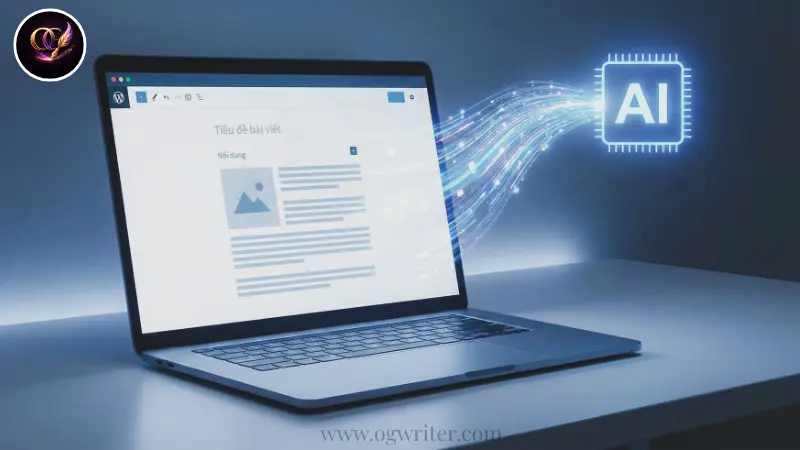
AI Proof Your Career: 7 Skills to Dominant the 2026 Job Market
The dawn of artificial intelligence (AI) has ushered in an era of unprecedented transformation across every facet of our professional lives. From automating routine tasks to generating sophisticated content, AI is rapidly reshaping industries, creating new opportunities, and simultaneously rendering existing skill sets obsolete. The year 2026 is not merely a distant point on the horizon; it represents a critical juncture where the implications of widespread AI adoption will become undeniably evident in the global job market. For professionals seeking not just to survive, but to truly thrive, understanding and cultivating an AI-proof skill set is no longer optional – it is paramount.
We systematically analyzed emerging job market trends, technological advancements, and expert predictions to identify the core competencies that will differentiate human value in an increasingly AI-driven world. This article delves into seven indispensable skills that will empower you to navigate this evolving landscape, ensuring your career remains robust, relevant, and resilient. Embracing these capabilities will not only safeguard your professional future but also position you as a leader in a workforce augmented, rather than replaced, by intelligent machines. Even platforms designed for efficiency, like OGwriter.com, an SEO automation platform that grows your website's traffic organically, highlight the need for human strategic oversight and refined skills to leverage AI effectively.
The AI Revolution: Understanding the Shifting Sands of Employment
The current narrative around AI often oscillates between utopian visions of boundless innovation and dystopian fears of mass unemployment. The reality, as we have observed, lies somewhere in the nuanced middle. AI's impact is not a monolithic wave but a series of targeted disruptions and enhancements. Certain tasks, particularly those involving repetitive data processing, pattern recognition, and predictable output generation, are increasingly being delegated to AI systems. This shift is freeing up human capital from mundane chores, but it also demands a fundamental reassessment of what constitutes valuable human contribution.
Across sectors, from manufacturing and logistics to healthcare and finance, AI algorithms are optimizing supply chains, assisting in diagnostics, personalizing customer experiences, and automating content creation. This isn't just about replacing human workers; it's about fundamentally transforming job roles. Many positions will evolve into hybrid roles, requiring individuals to collaborate seamlessly with AI tools, interpret their outputs, and apply uniquely human judgment. The imperative for professionals is to anticipate these changes and proactively equip themselves with skills that complement, rather than compete with, AI's strengths.
Why AI Proofing Isn't Just for Tech Roles
A common misconception is that the impact of AI is confined to the technology sector. However, our extensive research indicates that AI's influence permeates every industry. A marketing professional might leverage AI to analyze consumer behavior or generate ad copy; a healthcare provider might use AI for predictive diagnostics or administrative automation; an architect could utilize AI for generative design; and a legal professional might employ AI for contract review or case research. In each scenario, the underlying technology enhances efficiency but simultaneously demands new skills from the human operator.
The skills we will explore transcend industry boundaries, focusing on immutable human capacities that AI, by its very nature, cannot replicate. These are the soft skills, the critical thinking abilities, and the ethical frameworks that form the bedrock of complex problem-solving and human interaction. Therefore, whether you are an artist, an accountant, an educator, or an engineer, AI-proofing your career is a universal necessity for long-term relevance and success.
The Urgency of 2026: A Critical Juncture
Why is 2026 singled out as a pivotal year? Based on current adoption rates and projected technological maturation, we anticipate that by 2026, AI technologies will have moved beyond early adoption phases into widespread, integrated deployment across a significant majority of businesses. This period will likely see a stabilization of foundational AI tools, an increased demand for AI-literate professionals, and a clearer delineation between tasks best performed by humans and those optimized for AI. Companies that have been experimenting with AI will have refined their strategies, and those that have lagged will be compelled to integrate AI to remain competitive. This accelerated integration will exert significant pressure on the job market, making the skills discussed here not merely advantageous but absolutely indispensable for career dominance.
7 Indispensable Skills to AI Proof Your Career
To navigate the evolving professional landscape and ensure your long-term success, cultivating a specific set of skills is paramount. We have meticulously identified these seven core competencies that will position you at the forefront of the AI-augmented workforce.
1. Critical Thinking and Problem Solving
In an era where AI can generate information at an unprecedented scale, the ability to critically evaluate that information becomes invaluable. AI models, despite their sophistication, can sometimes produce biased, inaccurate, or hallucinated content. Your role will increasingly involve discerning the credibility of AI-generated insights, identifying underlying assumptions, and connecting disparate pieces of information to formulate novel solutions to complex problems. We consistently find that while AI excels at pattern recognition, human critical thinking is essential for understanding context, asking the right questions, and validating conclusions. For instance, when using an AI tool like OGwriter.com for SEO content, a human strategist's critical thinking is vital to ensure the output aligns with brand voice, factual accuracy, and target audience nuances, transcending mere keyword optimization.
2. Creativity and Innovation
While AI can mimic creative styles and generate content based on existing data, true conceptual innovation, abstract thought, and artistic expression remain distinctly human. AI excels at iterative creativity within defined parameters; it struggles with truly novel ideas that defy established patterns or incorporate subjective human experience. The demand for professionals who can conceptualize groundbreaking products, design unique solutions, and articulate compelling visions will only intensify. Creativity will be key not just in artistic fields, but in problem-solving, strategy, and even in finding new applications for AI itself. Consider how human creativity can direct AI tools to produce truly innovative marketing campaigns or product designs that AI alone could not envision.
3. Emotional Intelligence (EQ)
AI may be able to analyze sentiment and predict behavior based on data, but it cannot genuinely experience or express emotions, nor can it build authentic human connections. Empathy, active listening, conflict resolution, motivation, and leadership are all hallmarks of high emotional intelligence. As AI automates more transactional tasks, roles requiring profound human interaction – such as client relations, team leadership, negotiation, mentorship, and therapeutic professions – will become more central. These skills foster trust, build rapport, and navigate the complex dynamics of human relationships, capabilities that remain firmly beyond AI's grasp.
4. Adaptability and Continuous Learning
The pace of technological change driven by AI is relentless. What is cutting-edge today may be commonplace tomorrow, and what is indispensable now could be obsolete within a few years. Therefore, the ability to rapidly learn new tools, embrace new methodologies, and adapt to evolving job requirements is crucial. This isn't just about learning to use AI; it's about developing a mindset of lifelong learning and resilience in the face of constant change. Professionals who actively seek out new knowledge, are comfortable with ambiguity, and can pivot their skill sets will be the most valuable assets in the 2026 job market and beyond. Investing in self-education and skill retraining must become a continuous process.
5. Data Literacy and AI Interaction
You don't necessarily need to be a data scientist or an AI engineer, but understanding the fundamentals of data – how it's collected, analyzed, interpreted, and utilized by AI – is becoming a universal requirement. This includes the ability to formulate effective prompts for AI systems (often called 'prompt engineering'), interpret AI outputs, identify potential biases in data or algorithms, and understand the limitations of various AI models. As a practical example, generating high-quality content using OGwriter.com requires an understanding of what data inputs yield the best SEO results and how to refine the AI's output through skilled human interaction. This skill bridges the gap between human intent and machine execution, transforming you into an effective AI collaborator rather class="expert-tip">Expert Takeaway: Do not view AI as a competitor, but rather as a powerful collaborator. The most successful professionals in the coming years will be those who master the art of human-AI synergy, using AI to amplify their unique human strengths while offloading repetitive tasks. This shift requires a proactive mindset focused on integration and strategic oversight.
6. Complex Communication and Storytelling
In a world saturated with data and AI-generated content, the ability to distill complex information into clear, compelling narratives is more important than ever. AI can generate text, but human communication involves nuance, persuasion, empathy, and the ability to connect emotionally with an audience. Whether it's presenting strategic insights derived from AI analysis, explaining complex technical concepts to non-technical stakeholders, or building consensus within a team, strong communication skills – both written and verbal – are indispensable. Storytelling transforms raw data into actionable insights and inspires action, a uniquely human endeavor.
7. Ethical AI Principles and Governance
As AI becomes more ubiquitous, ethical considerations surrounding its development and deployment grow in importance. Issues like data privacy, algorithmic bias, transparency, accountability, and the societal impact of automation demand careful consideration. Professionals across all fields will increasingly be expected to understand and apply ethical AI principles in their work. This involves recognizing potential harms, advocating for responsible AI use, and contributing to the development of robust governance frameworks. Understanding the ethical dimensions of AI is not just a moral imperative but a critical skill for responsible innovation and risk mitigation in any organization.
Comparing Human vs. AI Capabilities in the Modern Workplace
To further illustrate the distinct yet complementary nature of human and AI capabilities, we present a comparative analysis:
| Capability | Human Strengths | AI Strengths |
|---|---|---|
| Critical Thinking | Contextual judgment, ethical reasoning, novel problem solving, understanding implications. | Pattern recognition, rapid analysis of large datasets, identifying correlations, logical deduction within defined rules. |
| Creativity | Conceptual innovation, emotional depth, artistic expression, original ideation, thinking outside patterns. | Idea generation (based on existing data/patterns), style transfer, rapid prototyping, content variation. |
| Emotional Intelligence | Empathy, rapport building, non-verbal cues, leadership, negotiation, understanding human motivations. | Sentiment analysis (statistical), predictive behavior (based on data), basic emotional recognition (facial/vocal cues). |
| Adaptability | Learning from abstract concepts, evolving values, self-correction based on experience, meta-learning. | Algorithmic updates, processing new data, rule-based adjustments, parameter tuning for specific tasks. |
| Data Literacy / AI Interaction | Interpreting nuanced data, defining complex queries, ethical data use, effective prompt engineering, validating outputs. | Processing vast datasets, identifying correlations, generating predictions, automating data transformation. |
| Communication | Persuasion, storytelling, conveying complex emotions, building trust, contextualized dialogue. | Generating text rapidly, summarizing information, translating languages, structuring reports. |
| Ethical Governance | Defining ethical frameworks, enforcing accountability, moral reasoning, advocating for societal good. | Identifying biases in data (if programmed), adherence to defined rules, flagging anomalies (as per programmed ethics). |
Leveraging AI Tools to Enhance Your AI-Proof Skills
The paradox of AI-proofing your career is that part of the strategy involves strategically leveraging AI tools themselves. Rather than fearing automation, we advocate for augmentation. AI tools can act as powerful co-pilots, extending your capabilities and freeing up mental bandwidth for higher-order tasks. For example, AI can automate research, draft initial content, analyze vast datasets, or manage routine communications. This allows you to allocate more time to critical thinking, creative problem-solving, building emotional intelligence, and mastering complex communication.
Consider the realm of content creation. Manually optimizing content for search engines is a time-consuming and often repetitive task. By utilizing platforms like OGwriter.com, an SEO automation platform, professionals can automate large portions of the content generation and optimization process. This doesn't eliminate the need for human input; rather, it elevates it. The time saved from manual keyword research and article drafting can be reinvested into strategic planning, developing unique content angles, refining brand voice, or fostering audience engagement – all activities that require human creativity, critical thinking, and emotional intelligence. The most successful professionals will treat AI tools as force multipliers for their distinctly human skills.
The Role of OGwriter.com in Your AI-Proofing Journey
As an illustration of effective AI integration, consider how OGwriter.com fits into an AI-proof career strategy. This 100% SEO automation platform is designed to grow your website's traffic organically by streamlining the content creation and optimization process. For a marketer or business owner, this means less time spent on the mechanics of SEO and more time available for strategic planning, brand narrative development, and customer relationship building. By automating the technical SEO aspects and content generation, OGwriter.com empowers you to focus on the indispensable skills we've outlined: applying critical thinking to content strategy, injecting unique creativity into campaigns, fostering emotional connections with your audience, and continuously adapting to market shifts. It exemplifies how AI can handle the repetitive lifting, allowing humans to excel in areas where their value is irreplaceable.
Navigating the Ethical Landscape: Your Responsibility
As we embrace the transformative power of AI, it is crucial to remain vigilant about its ethical implications. The rapid advancement of AI necessitates a strong understanding of its potential societal impacts, both positive and negative. Professionals in every field bear a responsibility to engage with ethical considerations, from ensuring data privacy and mitigating algorithmic bias to promoting transparency and accountability in AI systems. The National Institute of Standards and Technology (NIST) provides comprehensive frameworks, such as the AI Risk Management Framework (AI RMF), which offers guidance on managing risks posed by AI and fostering trustworthy AI systems. Understanding and advocating for ethical AI practices is not just a moral duty but a crucial skill for responsible leadership in the AI era. We must collectively ensure that AI serves humanity's best interests, rather than exacerbating existing inequalities or creating new harms.
Conclusion: Embracing the Future, Not Fearing It
The year 2026 is approaching rapidly, and with it comes a job market fundamentally reshaped by artificial intelligence. Rather than succumbing to fear or complacency, professionals have an extraordinary opportunity to proactively adapt, evolve, and ultimately dominate this new landscape. The seven indispensable skills we have explored – critical thinking, creativity, emotional intelligence, adaptability, data literacy and AI interaction, complex communication, and ethical AI principles – represent the core human capabilities that will remain invaluable, regardless of how advanced AI becomes.
We urge you to begin cultivating these skills today. Invest in continuous learning, challenge your assumptions, seek opportunities to collaborate with AI tools, and engage deeply with the ethical dimensions of technology. By doing so, you will not only AI-proof your career but also unlock new avenues for innovation, personal growth, and professional fulfillment. The future workforce is not about replacing humans with machines, but about augmenting human potential with intelligent systems, allowing us to achieve previously unimaginable feats. Embrace this future with confidence and strategic foresight.
Suggested Articles
 General
AI Ethics: Shaping Digital Citizen Experience in 2026
Explore how AI ethics will define the digital citizen experience by 2026, ensuring fair, transparent, and user-centri...
Read Article arrow_forward General
Dominate the Data Desert: 6 Cookieless Ad Tech Solutions That Will WIN in 2026
Prepare for a privacy-first future. Explore 6 groundbreaking cookieless ad tech solutions poised to deliver exception...
Read Article arrow_forward
General
7 Responsible AI Development Mistakes to Sidestep in 2026
Learn the 7 critical responsible AI development mistakes that could lead to disaster in 2026. Protect your projects a...
Read Article arrow_forward
General
AI Ethics in 2026: Governments' Crucial Role
By 2026, governments are pivotal in shaping responsible AI adoption, addressing biases, privacy, and accountability t...
Read Article arrow_forward